
Winter Wind Protection
I've lost more foliage to a dry, biting wind than to any single cold night, and most growers underestimate that until it happens to one of their own trees.
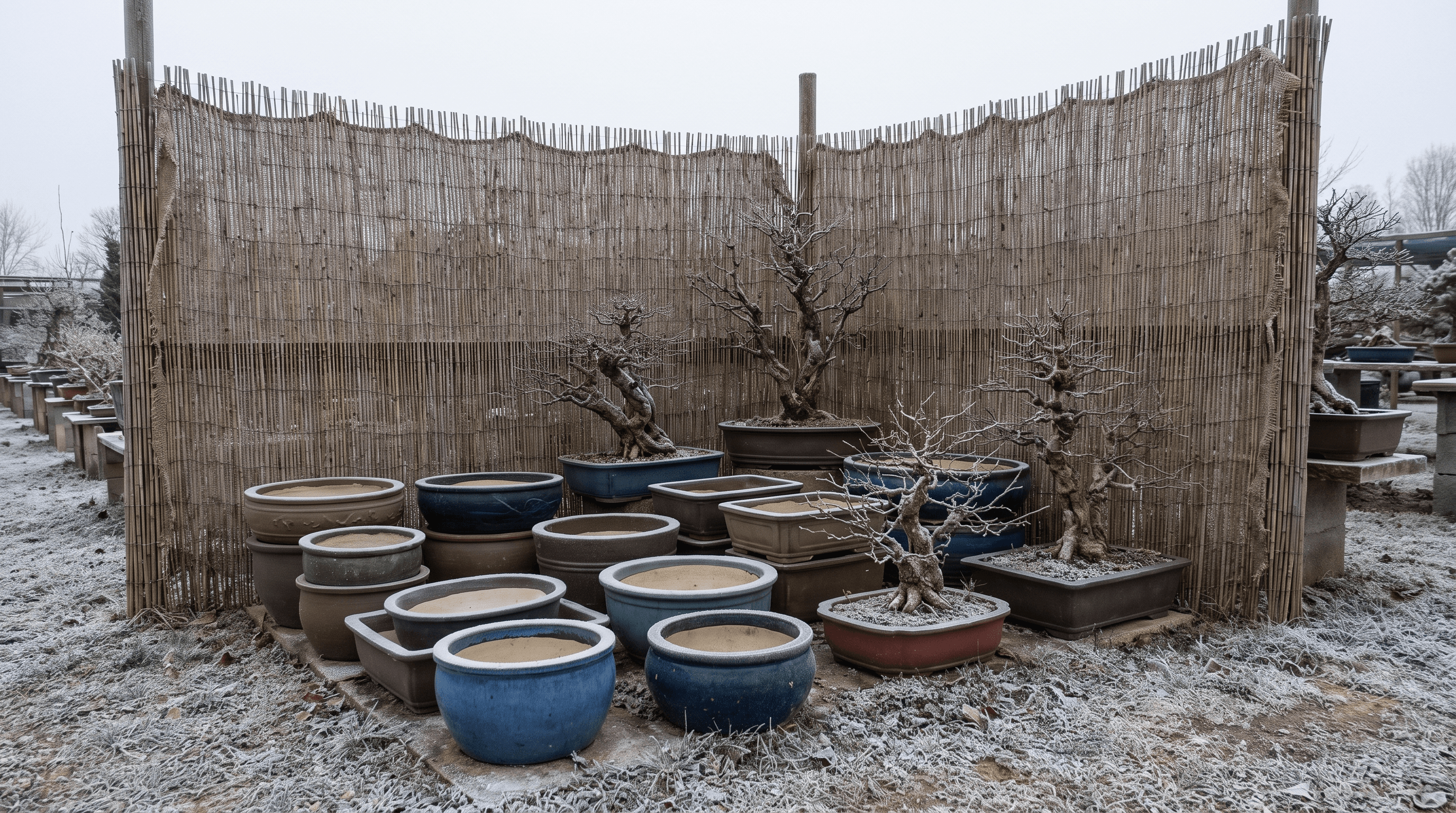
Temperature gets all the attention in winter care conversations, and wind gets treated as an afterthought, something you deal with by moving a pot slightly or not at all. That's backwards in my experience. A still, cold night at a given temperature is a very different situation for a bonsai than the same temperature with a steady wind running through the foliage and around an exposed pot, and the second one is usually the more damaging of the two.
Wind does two things a thermometer doesn't capture. It pulls moisture out of foliage and bark faster than still air does, which matters a lot on evergreens still carrying needles or leaves through winter, and it drops the effective temperature the tree experiences well below what a weather report is telling you. I've had a tramontana blow through here for two or three days straight in what wasn't an especially cold January by the numbers, and it did more visible damage to exposed junipers than a proper hard frost the week before.
None of this requires anything elaborate to manage. It's mostly about where you put pots and what you put between them and the wind, and a lot of it costs nothing at all.
Why wind is often worse than cold alone
Wind increases moisture loss from foliage at exactly the time of year when roots are least able to replace it, since cold substrate slows water uptake even when the rootball itself isn't dry. That combination, foliage losing moisture faster while roots supply it slower, is what causes the scorched, browned look on evergreen foliage that people often mistake for straightforward cold damage. It's really desiccation, and it happens more from a dry, moving wind than from still, cold air at the same temperature. Wind also strips away the thin boundary layer of slightly warmer air that naturally sits around a tree in calm conditions, which is part of why a windy night feels so much colder to the tree than the thermometer suggests.
Position matters more than any single product
The single most effective thing I do every winter costs nothing, I move pots to the side of a wall, fence, or building that's sheltered from the prevailing wind direction. That alone blocks a huge amount of what would otherwise hit a tree head on through the coldest months. If you know which direction your worst winter wind typically comes from, and most growers do once they think about it, positioning benches or pot groupings on the leeward side of any solid structure you have available makes a bigger difference than most people expect from something so simple.
Grouping pots together helps more than you'd think
A single pot standing alone on an open bench is exposed on every side. Cluster several pots close together and the ones on the outside of the group act as a partial buffer for the ones inside, and the whole group holds a slightly more stable microclimate than any one pot would on its own. I do this every winter with my more exposed or borderline hardy trees, pulling them into a tight group against a sheltered wall rather than leaving them spread out across the bench the way I would in summer when airflow between them matters for other reasons.
Building an actual windbreak
For anyone dealing with a genuinely exposed spot, a simple barrier makes a real difference even if it's not solid. Windbreak netting, shade cloth, or even stacked straw bales cut wind speed significantly on the sheltered side without creating the turbulence a completely solid wall sometimes causes downwind of it. I'd rather have a permeable barrier that slows the wind than a solid one that blocks it entirely and then whips it around the edges in unpredictable gusts. Height matters too, a barrier only needs to be a bit taller than the trees it's protecting to cut most of the wind at pot level, where it does the most damage to an exposed rootball.
Watch for the specific signs of wind damage
Wind damage often shows up differently than straightforward cold damage. Foliage on the windward side of a tree browns or scorches while the sheltered side stays green, a pattern that's a pretty clear signal of drying wind rather than an even cold event that would affect the whole tree more uniformly. Bark can also dry and split on exposed branches in a way it wouldn't in still air at the same temperature. Once I see that lopsided damage pattern on a tree, repositioning it for the rest of the season is usually enough to stop it from getting worse, and most of that foliage recovers once spring growth starts covering the scorched areas.
Common questions
Is wind really more damaging to bonsai than cold temperature alone?
In my experience, often yes, particularly for evergreens still carrying foliage through winter. Wind pulls moisture out of foliage and bark faster than still air, and it drops the effective temperature a tree experiences well below the actual reading on a thermometer, so a windy night at a moderate temperature can do more harm than a calm, colder one.
How do I know which direction to shelter my bonsai from?
Pay attention over a season or two to which direction your worst, most persistent winter wind tends to come from, it's usually consistent in a given location. Positioning pots on the sheltered side of a wall, fence, or building relative to that direction is one of the most effective and cheapest things you can do.
Does grouping pots together help against wind?
Yes, clustering pots close together creates a partial buffer, with trees on the outside of the group shielding the ones inside to some degree. I use this every winter for my more exposed or borderline hardy trees, pulling them into a tight group against a sheltered spot rather than spacing them out.
What's the best material for a bonsai windbreak?
A permeable barrier, windbreak netting or shade cloth, generally works better than a completely solid wall, since a solid barrier can create turbulent gusts on its sheltered side. The barrier only needs to stand a bit taller than the trees behind it to cut most of the wind at pot level.
How can I tell if wind, not cold, caused damage to my bonsai?
Wind damage often shows up unevenly, with foliage browning or scorching on the side of the tree facing the prevailing wind while the sheltered side stays green. An even cold event tends to affect the whole tree more uniformly, so that lopsided pattern is a fairly reliable sign wind was the main factor.
Do deciduous bonsai need wind protection in winter too?
Less than evergreens, since bare branches lose far less moisture to wind than foliage does, but the effect on roots and pot temperature still applies. A bare deciduous tree in an exposed, windy spot still experiences a colder effective temperature at the roots than the same tree sheltered from wind.
Can strong winter wind alone kill a bonsai?
On its own, severe and prolonged wind exposure combined with cold can cause serious desiccation damage, especially to evergreens, and in extreme or repeated cases that can be enough to kill a tree, particularly one that's already borderline for the climate. It's rarely the sole cause though, it usually compounds with cold or dryness at the roots to create a worse outcome than either factor alone.
Should I move my bonsai every time a windy day is forecast?
Not for one windy day, that's more disruption than benefit for most trees. It's more useful to find a good sheltered winter position once at the start of the season and leave trees there through the coldest months, reserving extra precautions for genuinely severe or prolonged wind events.
También te puede gustar
General guidance based on 20+ years of practice. Every tree, climate, and year is different — when in doubt, ask us.