
Late Winter Bonsai Pruning Window
The last few weeks before spring growth starts are, for a lot of species, the clearest window all year to see exactly what you're cutting and why.
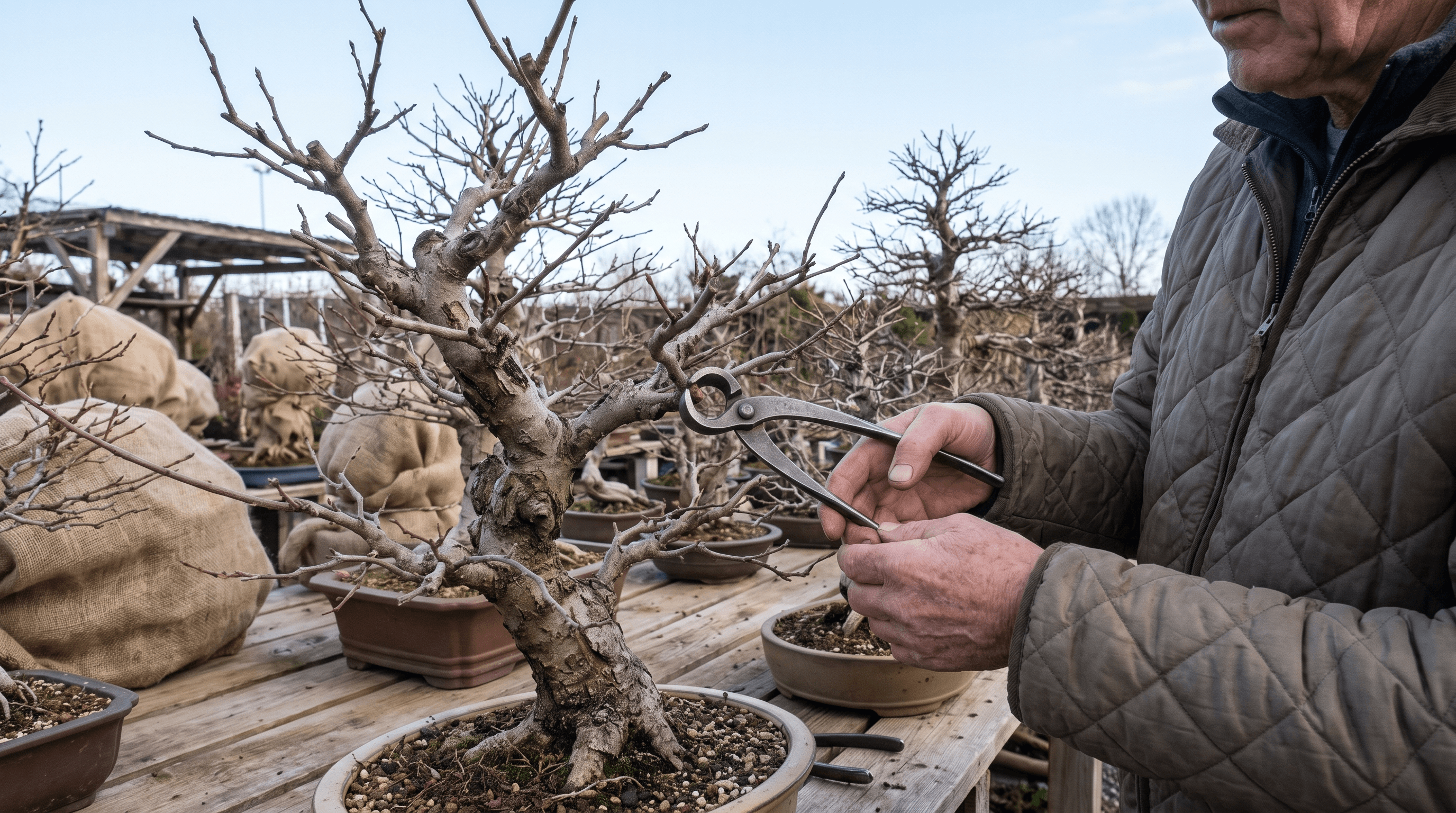
There's a stretch every year, after the coldest part of winter has passed but before buds start swelling in earnest, that I look forward to more than almost any other point on the calendar. The tree is still fully dormant, so there's no active growth to disrupt, but the branch structure is completely visible with nothing in the way, no leaves, no confusing flush of new shoots obscuring the lines you're actually trying to work with.
This is really a structural window, not a fine detail window, and it suits deciduous species and pines especially well. The kind of pruning that suits late winter is the big decisions, which major branches stay, which get removed, where the overall silhouette needs correcting, rather than the finer twig selection work that often makes more sense once the tree is growing and you can see how it's actually responding. A few species are the exception, satsuki azalea in particular heals poorly and is more prone to dieback from cuts made during winter dormancy, so I hold structural work on those until they're actively growing in spring.
It's also often a gentler time for the tree itself. A dormant tree isn't spending energy on active growth that a cut would interrupt, though a fresh cut made in the depths of winter typically heals slowly, since real compartmentalizing tends to pick up once temperatures rise rather than happening much through the coldest weeks themselves.
Why the branch structure is clearest right now
On deciduous species this is obvious, no leaves means nothing hiding the actual lines of the tree, and you can step back and evaluate the whole silhouette in a way that's much harder once foliage fills in every gap. What's less obvious is that this clarity also applies, to a lesser degree, on pines, where winter's slower growth means the current structure is about as settled as it will be before a new flush changes the proportions again in spring. I do the bulk of my structural decision making during this window specifically because I can see what I'm doing without foliage getting in the way or tempting me to keep a branch just because it's currently covered in green.
What this window is actually good for
Late winter is for the big calls, removing a competing leader, correcting an unbalanced silhouette, taking out a branch that's crossing or duplicating the job of a better placed one nearby. These are decisions that benefit from seeing the whole tree clearly and from a dormant tree's reduced sensitivity to the disruption. It's a less ideal window for fine detail work like selective twig pruning within a pad, which I generally prefer to do once growth is underway, since I can see which shoots the tree is actually favoring, rather than guessing at that in advance on a completely bare structure, though other growers make that call differently.
Timing it against the season, not the calendar
I don't prune on a fixed date, I watch the trees. The window I'm after is after the hardest cold has passed but before buds show real swelling, and that shifts year to year depending on how the winter's gone. A mild winter can push that window earlier, a harsh one later, and different species in the same collection won't necessarily hit it at the same time either. Cutting too early, deep into a still-active cold spell, risks exposing fresh wounds to weather they don't need to deal with, while waiting too long into visible bud swell starts eating into the energy the tree has already committed to that season's growth.
Minimal disruption to a tree that's still resting
One of the real advantages of this window is how little it costs the tree compared to pruning during active growth. A dormant tree isn't redirecting resources toward the cut site the way it would if you removed a branch mid-summer while everything nearby is actively growing and competing for the same energy. The wound itself may not do much visible healing while it's still cold, since compartmentalizing and callusing tend to pick up once temperatures rise, but at least the cut is made and the tree isn't diverting spring's first flush of energy toward it.
Wound care still matters even in the cold
Just because the tree is dormant doesn't mean a fresh cut is immune to problems. Larger cuts still benefit from sealing, particularly on species prone to dieback or infection at open wounds, and I'm careful about tool hygiene in late winter the same as any other time of year, since a contaminated tool doesn't care whether the tree it's cutting is dormant or actively growing. I also avoid pruning during an active hard freeze if I can help it, waiting for a milder stretch within the broader window rather than working on the coldest possible day just because the calendar says it's technically late winter.
Common questions
When exactly is the late winter pruning window?
It's the stretch after the coldest part of winter has passed but before buds start showing real swelling, which shifts year to year and by species depending on how the winter has gone. Watch the trees rather than a fixed date, a mild winter can push the window earlier and a harsh one later.
What kind of pruning is best done in late winter?
Structural, big picture decisions, removing competing leaders, correcting silhouette imbalance, taking out crossing or redundant branches. It's less suited to fine detail twig selection, which generally makes more sense once growth is underway and you can see which shoots the tree is actually favoring.
Is it safe to prune a bonsai while it's still dormant?
Yes, and it's often preferable, since the tree isn't redirecting energy toward active growth the way it would be during the growing season. A dormant tree often tolerates structural cuts with less overall disruption than the same cuts made mid-summer, though the wound itself typically heals slowly until temperatures rise in spring.
Should I seal pruning wounds made in late winter?
For larger cuts, yes, particularly on species prone to dieback or infection at open wounds. Dormancy doesn't make a fresh cut immune to problems, so the same wound care practices you'd use any other time of year still apply.
Can I prune during a hard freeze in late winter?
I'd avoid it if possible, waiting for a milder stretch within the broader late winter window rather than cutting on the coldest possible day. It's less about the tree being harmed directly and more about giving a fresh wound a slightly better start than exposing it to the harshest conditions of the season.
How do I know if I've waited too long into the pruning window?
Visible bud swell is the signal that the window is closing. Once buds are clearly swelling, the tree has already committed real energy to that season's growth, and structural cuts start costing more in terms of disrupted resources than they would have a few weeks earlier.
Do all bonsai species have the same late winter pruning window?
No, different species in the same collection can hit their own version of this window at different points, since they respond to temperature and daylight differently. Satsuki azalea is a clear exception rather than just a timing difference, since it heals poorly from cuts made during winter dormancy and is better pruned once it's actively growing. I watch each tree individually for how close it is to breaking dormancy, and whether it's a species this window suits at all, rather than assuming the whole collection is ready on the same day.
También te puede gustar
General guidance based on 20+ years of practice. Every tree, climate, and year is different — when in doubt, ask us.