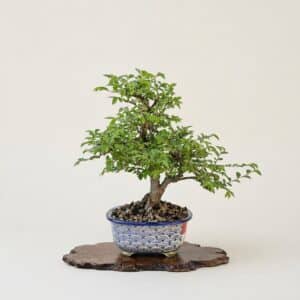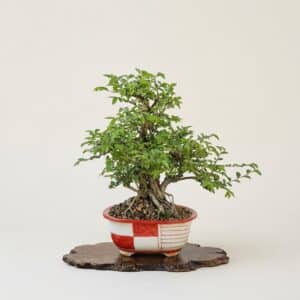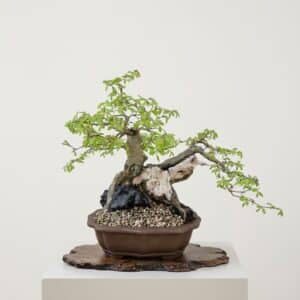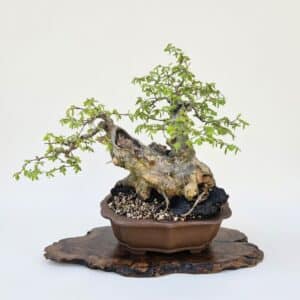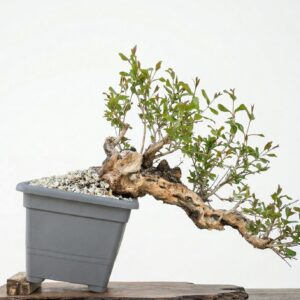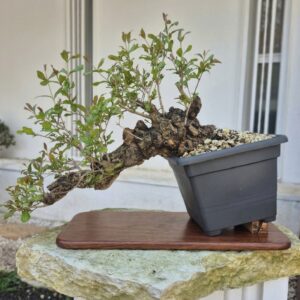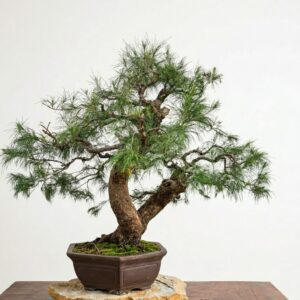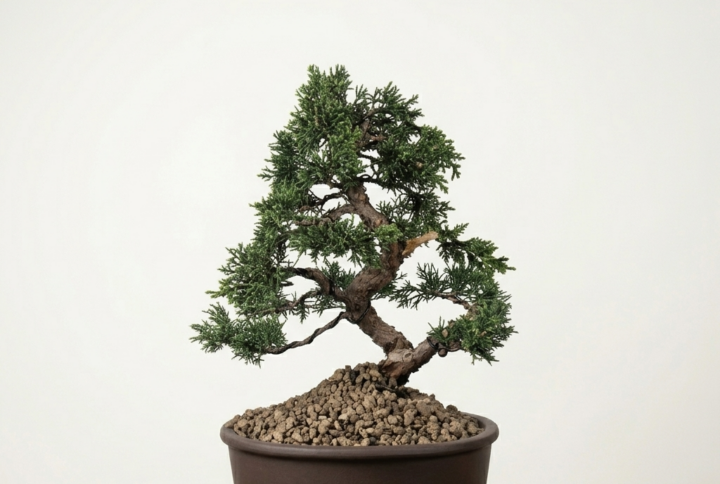
About this Kishu juniper cascade bonsai
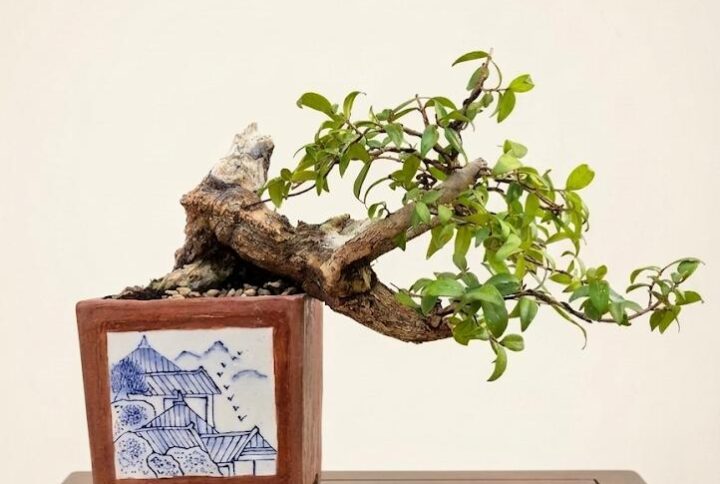
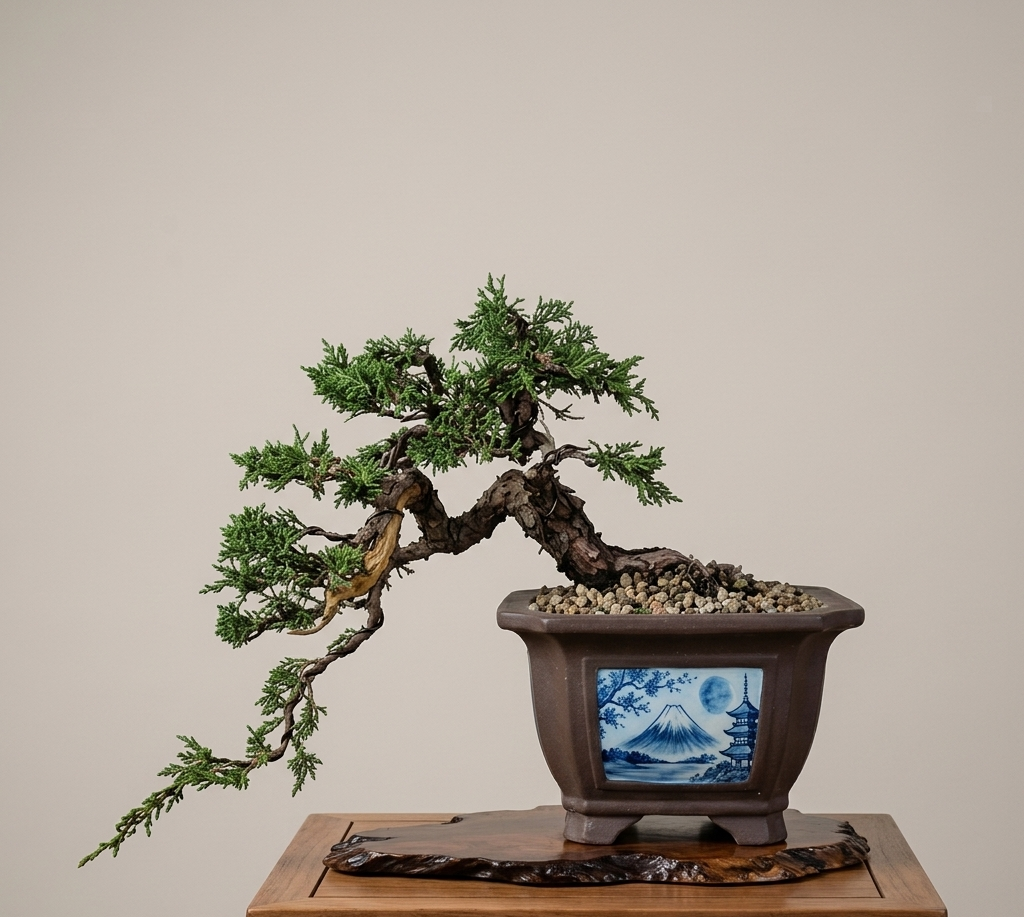
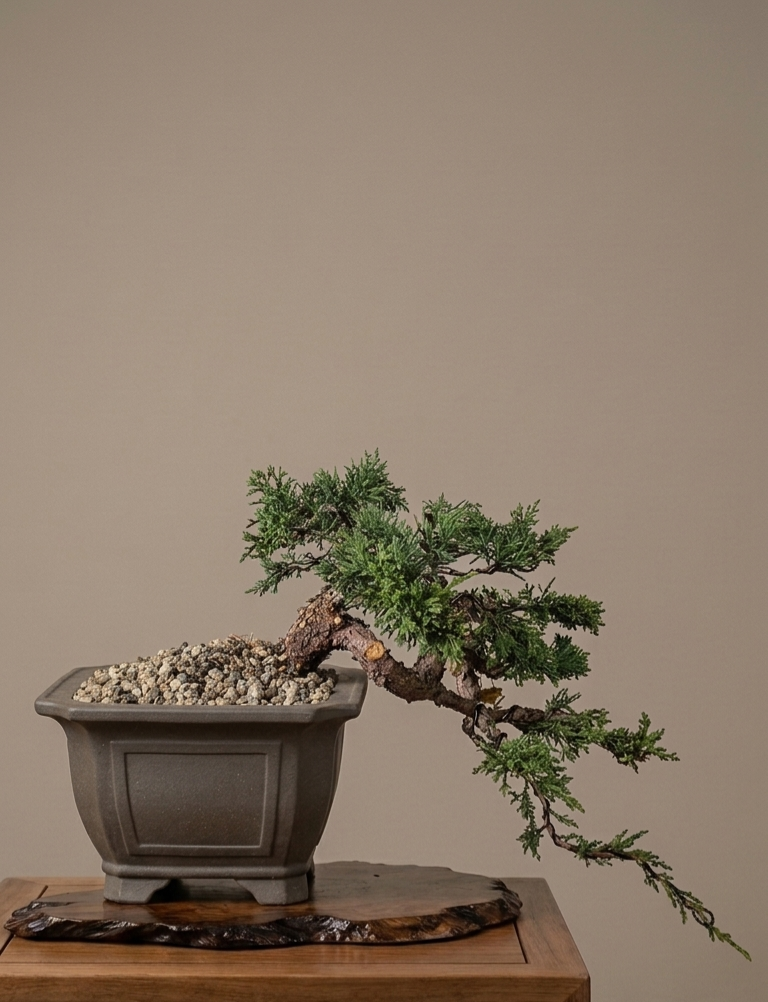
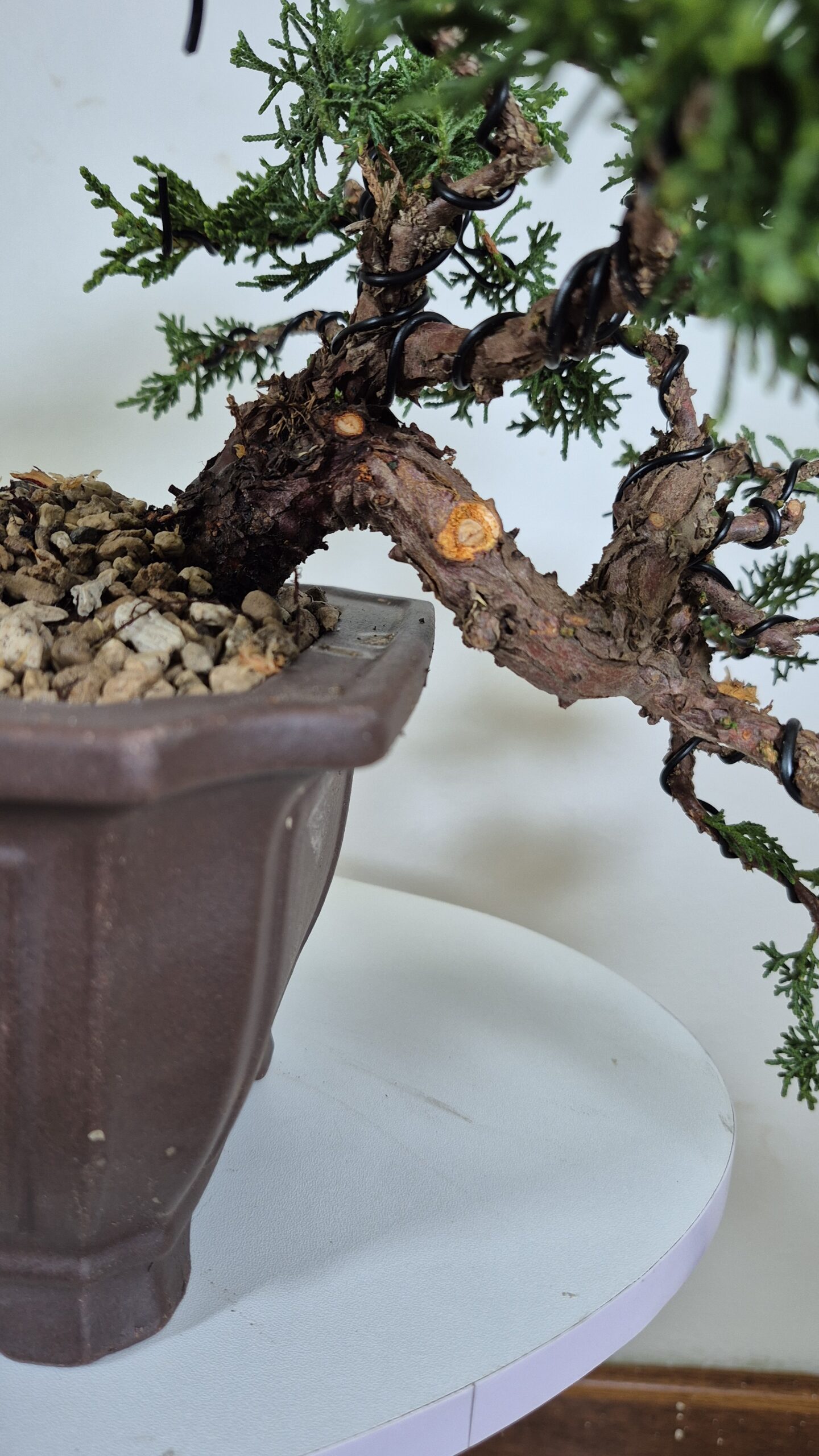
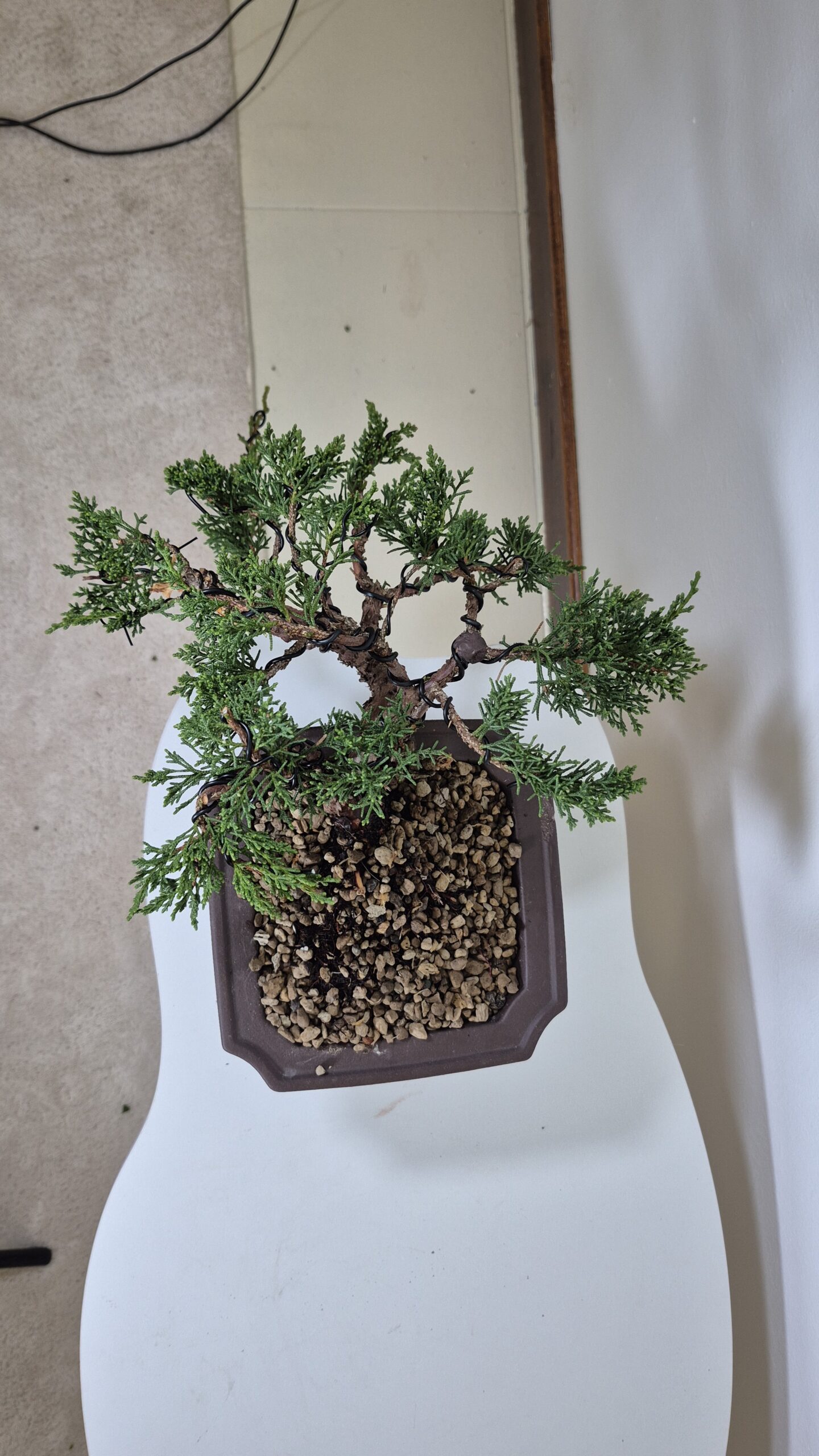
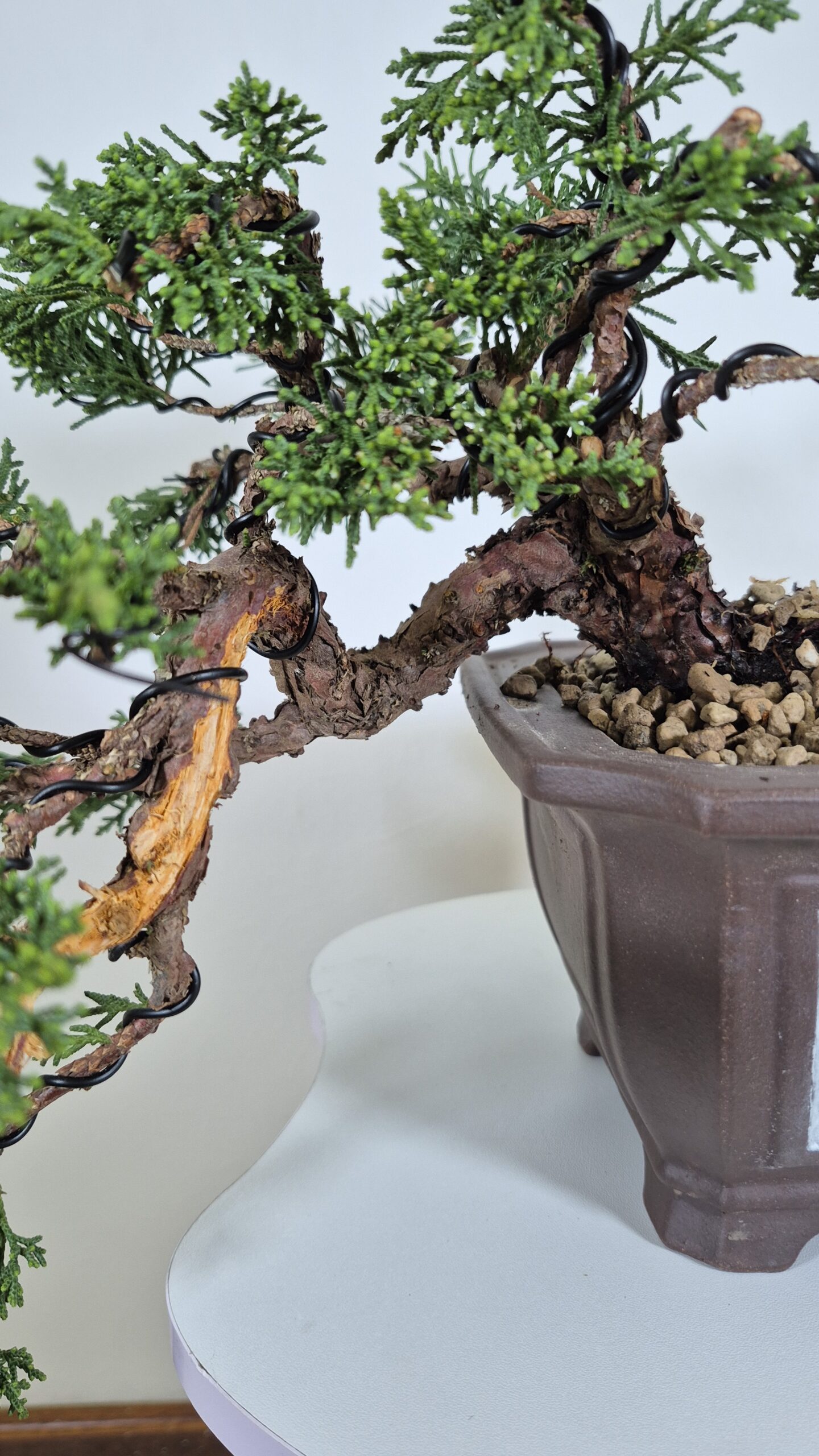
This Kishu juniper cascade bonsai presents a dramatic descending form. The 12 cm trunk anchors the composition at the top of the 11 × 18 × 18 cm pot, then the canopy plunges 30 cm sideways and downward, finishing well below the pot rim. The total visible height of the live foliage is 13 cm above the rim — the rest of the tree is built on the descent.
Dimensions: Height 13 cm above pot · Width 30 cm · Trunk 12 cm · Pot 11 × 18 × 18 cm. Photographed in April 2026.
About the cultivar and the cascade form
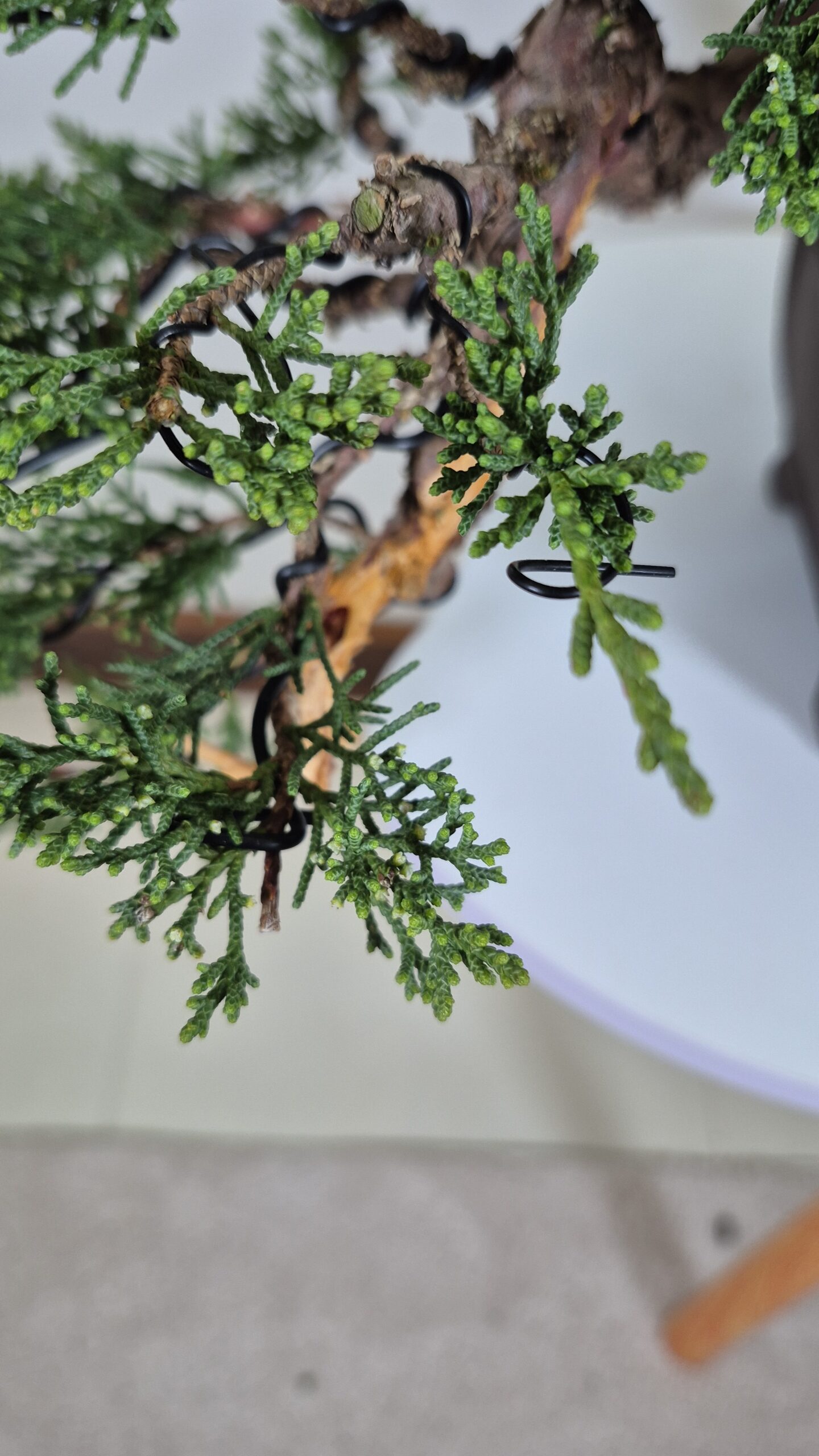
Juniperus chinensis ‘Kishu’ comes from the Kishu area of Japan and is one of the most popular Shimpaku cultivars for bonsai. The needles are short and soft, the colour is a stable bright green, and the wood develops well-defined deadwood character. Cascade — kengai in Japanese — is the most physically demanding bonsai style: the canopy must defy gravity convincingly, the apex needs to live below the level of the pot’s base, and the visual centre of gravity must shift down without breaking compositional balance.
Why choose this specimen
A 12 cm trunk on a tree with 30 cm of horizontal extension is substantial. The trunk has the calibre to carry the canopy weight visually as well as physically. The 11 × 18 × 18 cm cascade pot is taller than a standard bonsai pot, which is technically required for kengai: the extra depth offsets the descent of the canopy and keeps the composition stable on a display stand.
Care and placement
This Kishu juniper cascade bonsai is an outdoor species and stays outdoors all year. Full sun for most of the day keeps the foliage tight and bright. The cascade form makes water management slightly different: the cascading branch dries faster than the apex because it is exposed on all sides. In summer, check the substrate every morning and water thoroughly, including a gentle spray over the cascading branch. Feed monthly from spring through autumn with a balanced organic bonsai fertiliser, reduced in midwinter.
Through the seasons
Spring brings the most growth, with new shoots extending along the cascade. Pinch tips by hand through summer to maintain density along the descending lines. Autumn slows growth and deepens the foliage colour. In winter the tree rests; in cooler parts of the country a position protected from prolonged hard frost is advisable, while in warmer parts the tree winters in a sheltered outdoor spot. A cascade is more vulnerable to wind damage than upright forms — a wall or panel break on the windward side is helpful in exposed positions.
The cascade form in European bonsai practice
Cascade is a comparatively rare style in European collections because the form takes longer to develop and requires a taller pot, a sturdier display stand, and a more careful placement. Specialised growers and collectors built up the cascade tradition across Europe through the late twentieth century, and Kishu became one of the preferred cultivars for the style because of its flexibility and its tolerance of branch bending. Owning a kengai-form juniper places the collector in a specific niche of the international bonsai community.
Styling and the years ahead
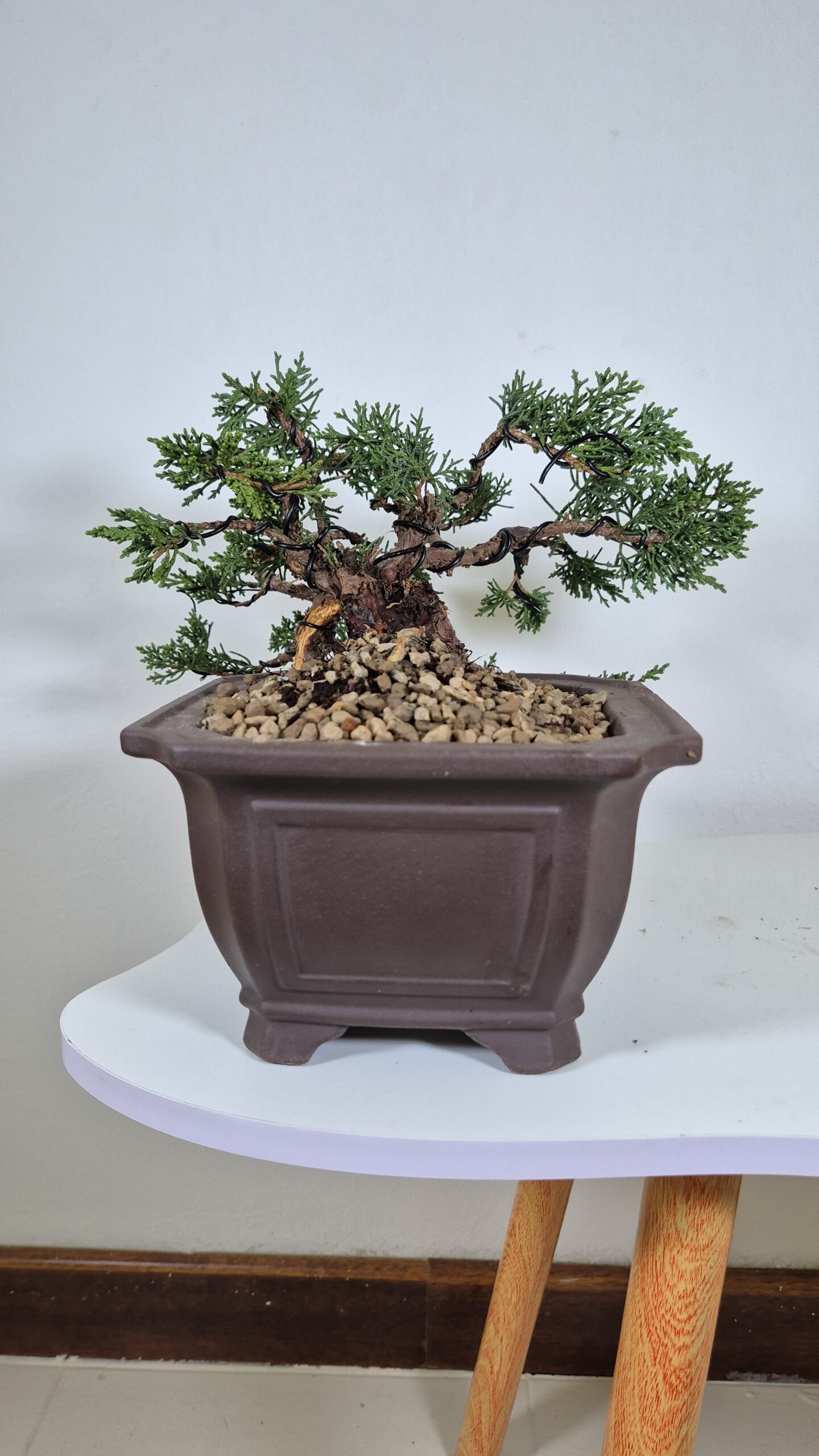
The cascade direction is fully established. Future work will focus on density along the descending line: pinching, selective wiring of secondary branches to refine silhouette, and gradual development of deadwood. Repotting every two to three years, into a similar deep pot, with a free-draining substrate of Akadama, pumice and lava in equal parts.
Shipping and what you receive
You receive the exact tree shown in the photographs, in the cascade pot pictured. Nothing else is included. The bonsai is packed individually in a wooden crate that protects the descending canopy, and shipped from Italy in one business day.